
 by
by You’ve seen the memes by now. You’ve seen Gym Joe on IG trying to make a homemade squat rack in order to keep his gains. You’ve seen a million “no equipment-5 minute arm flab toning” workouts that consist solely of arm circles. People are getting really creative. Don’t get me wrong, if you’ve never done 1 minute straight of tiny arm circles, you definitely won’t see the appeal, but that’s not exactly going to get you the results the title of those videos suggest you are. Creativity is wonderful! Upping the creativity can keep things fun and fresh, but for those of you who want to move with a specific goal in mind, you can still have a legit routine in place using the principles of progressive overload.
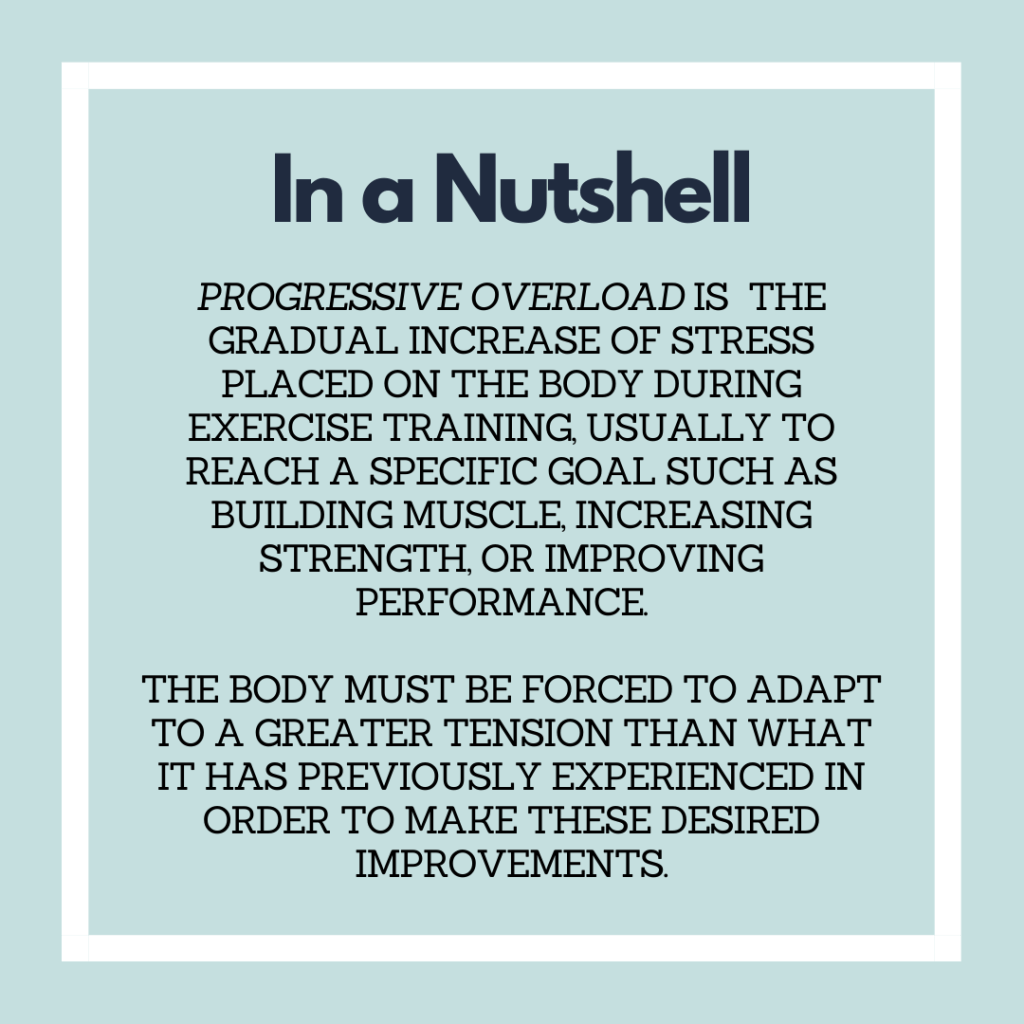
There are many ways you can train with progressive overload in mind.
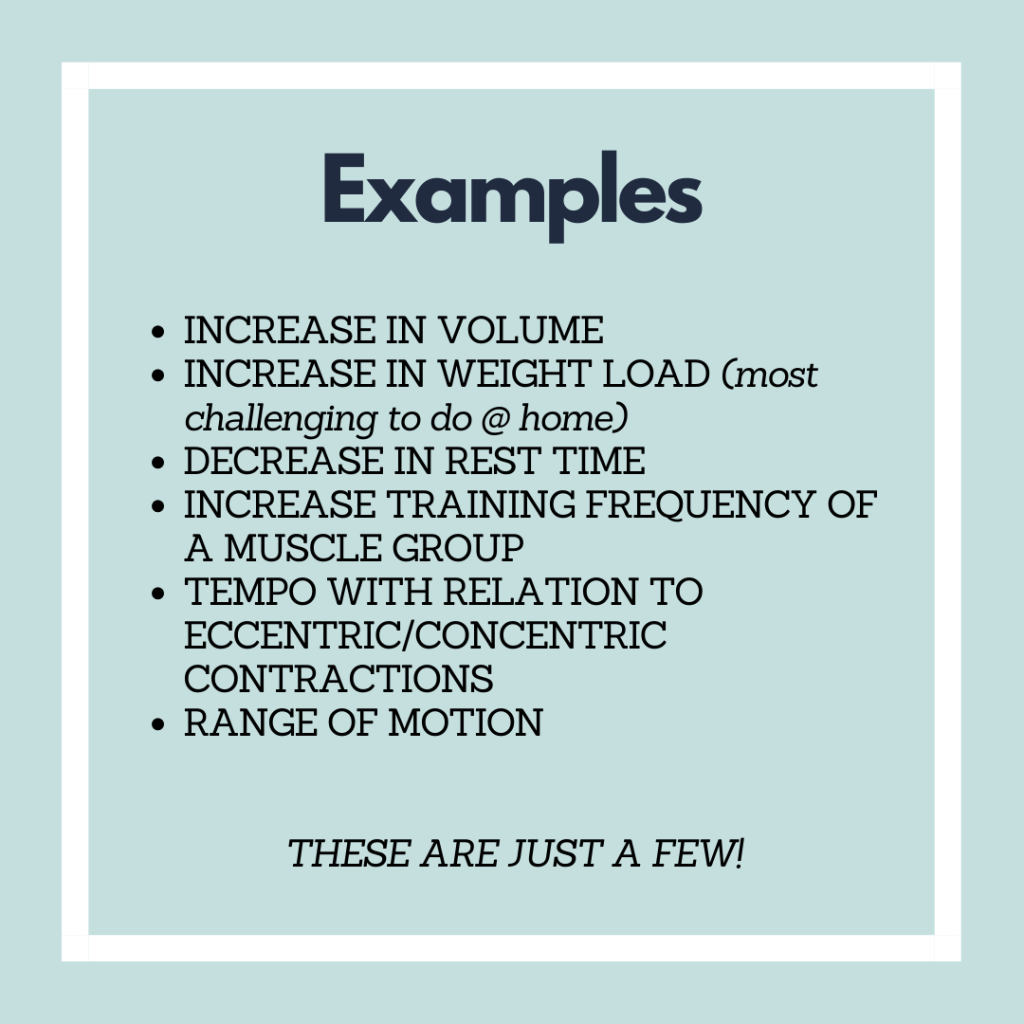
Now, let’s break these down a bit to see how we can incorporate these methods at home.
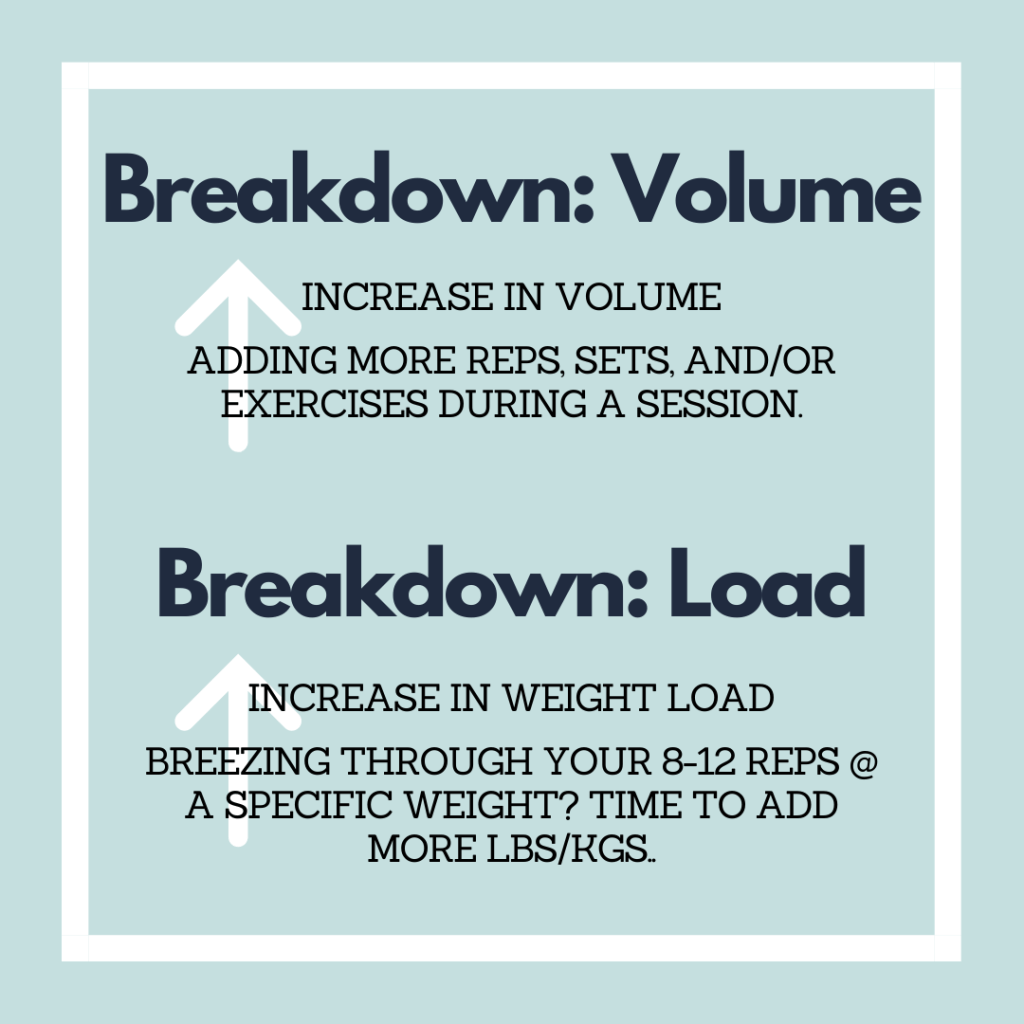
VOLUME & LOAD
Muscular hypertrophy seems to work best with sets of 3-4 and reps of around 8-12. If you’re wanting to build substantial muscle mass, you’ll definitely want to add more weight to these reps over time as well, but more beginners, simply adding more reps, sets, & exercises over time will help you achieve your goal and make some muscle gains. If you’re trying to maintain your muscle mass, this will also help! It takes muscle longer to atrophy than it does to build, so as long as you’re still utilizing and pushing those fibers often, you won’t be as ad off as you might think.
If you’re wanting to reach a new push-up or pull-up goal, volume is your friend. Sure, curling heavy dumbbells for a few reps makes you stronger, but doing that alone won’t help you doing loads more push-ups/minute nor will it help move your own body’s weight efficiently, we’ll need some muscular endurance for that!
Oh, so you can already do a million push-ups in a minute? (I’ve seen the comments, there’s always someone who thinks there’s nothing more they can do.) Cool. Stack a whole bunch of books on your back and now perform the exercise again without dropping a single book. You have now not only made this exercise more difficult, but you’ve introduced new variables such as load and stability.
Obviously, when stuck at home with gym supplies scarce at the moment, increasing your load may be a difficult task. Perhaps unless you’re trying to compete for Mr. Olympia you can and will be able to make gains at home if you’re still challenging & forcing your body to adapt through other methods of progressive overload.
The stronger and more efficient you are with moving your own body’s mass will help you pump out the iron much better once the gyms are back open.

REST & FREQUENCY
The more demand we put on our body, the more we require it to adapt to become more efficient in the future. Shortening rest times will not only aid in cardiovascular endurance, but overall muscular endurance as well. Progressively overloading your HIIT routines can definitely get you some muscle gains. Everyone is afraid that doing more cardio style workouts will shrink their muscles, but we’re talking being a more well rounded athlete here. The best athletes in the world can not only lift heavy weights, but can do HIIT with the best of them. Are they without substantial muscle mass? No. It all depends on how you train.
Just because we’re decreasing rest time, doesn’t necessarily mean you’ll be doing a HIIT routine. That’s just one example! EX 2: For regular resistance training sessions, rather than 60 seconds between sets, try 30 sec. It can be easy to think we’re not resting that long, but if you actually take out your phone and time yourself, you’d be surprised how long we may actually be resting without thinking about it.
It may seem like a no brainer to just increase how many workouts you’re doing a week to get better results. Well, yeah…BUT if you want to improve specific muscle groups, making sure to increase the frequency of which you work them is how you’re going to grow them.
Note: If you’re increasing your training frequency please be aware of any signs of overtraining.
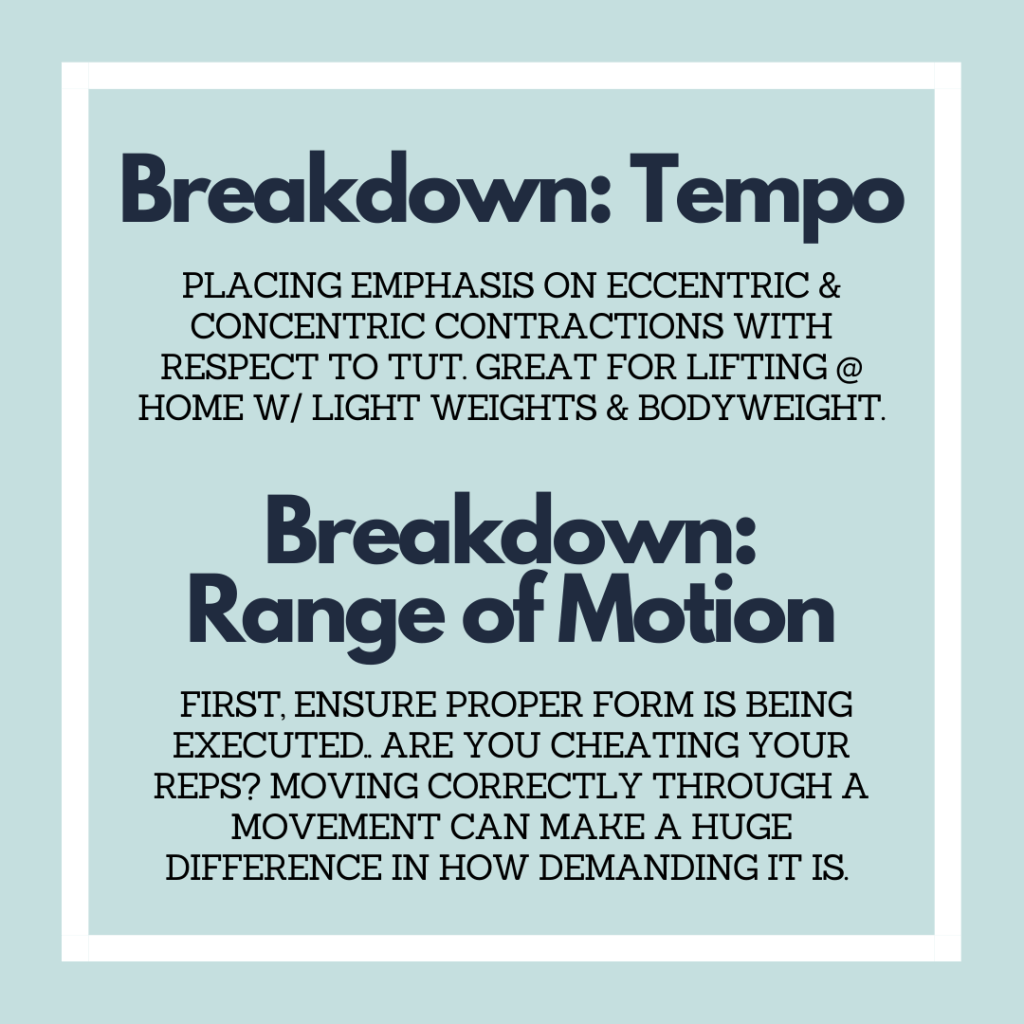
TEMPO & RANGE OF MOTION
Tempo is a fun one. Sick and tired of bodyweight squats at home? Tell me, how quickly are you moving through a set? Odds are, you’re probably going through the motions, up, down, up, down, 1, 2, 1, 2…
Now, what if you were to move down through the motion for 5 counts and up through the motion for 5 counts. That changes things doesn’t it? You can tweak the tempo for both the concentric and eccentric contractions of any exercise. Ever done a set of 10 on a leg extension machine and then on the last few reps resisted gravity on the release for 10 seconds? SUCKS, DOESN’T IT?! That, my friends, would be progressively overloading the eccentric muscle contraction. When you slow the eccentric contraction, especially with a load working against it, you are actually working those muscles much harder and they’ll tear down more than they would otherwise.
Unless you’ve got a trained eye, a large mirror at all times, work with a professional every time you exercise, or are just perfect all around, you can improve your form every. single. day. Are you cheating your reps? If you don’t properly move through a complete range of motion during any given exercise, your body has adapted to how you perform that exercise. If you were to improve your form, say, by allowing your arms to drop completely during a bicep curl, your chin to come high over the bar during a pull-up, A-Shape elbows during your push-ups, and even proper alignment & depth in your squats, you are all of a sudden going to be demanding more from your body. The exercises will become more difficult. Form should always be #1.
At the end of the day, all of these methods cohesively work together, no?
Want to build muscle? Increase your reps from 4 up to 12.
Plateauing there? Time to increase the load.
Body adapting? Place more stress on the muscles and add a few new exercises during your workouts.
Mastering those exercises? Add new variables that continue to challenge the nervous system. (Instability, single leg movements, eccentric vs. concentric contractions, add elevation and decline motions, etc.)
Remember this: We can always make our workouts more challenging, with or without a gym.
After all, our bodies work most efficiently and effectively when we train with multiple modalities. Make your body your machine!
 FIT ASCENT
Leave a comment